
Rideshare
The eight-to-twenty-two minute window between the bar and the bedroom. The screen is right in front of the rider, and the rider isn't going anywhere.
Highfloor's rideshare layer puts in-vehicle screen ads in front of the audience during the eight-to-twenty-two-minute ride window between venues, or between the venue and home. The screen is captive, the rider isn't going anywhere, and the post-venue context is conversion-window-aligned for verticals like DUI defense, personal injury, hospitality delivery, and dating-and-social apps. Rideshare layers on top of bar TV: rarely the entire campaign.
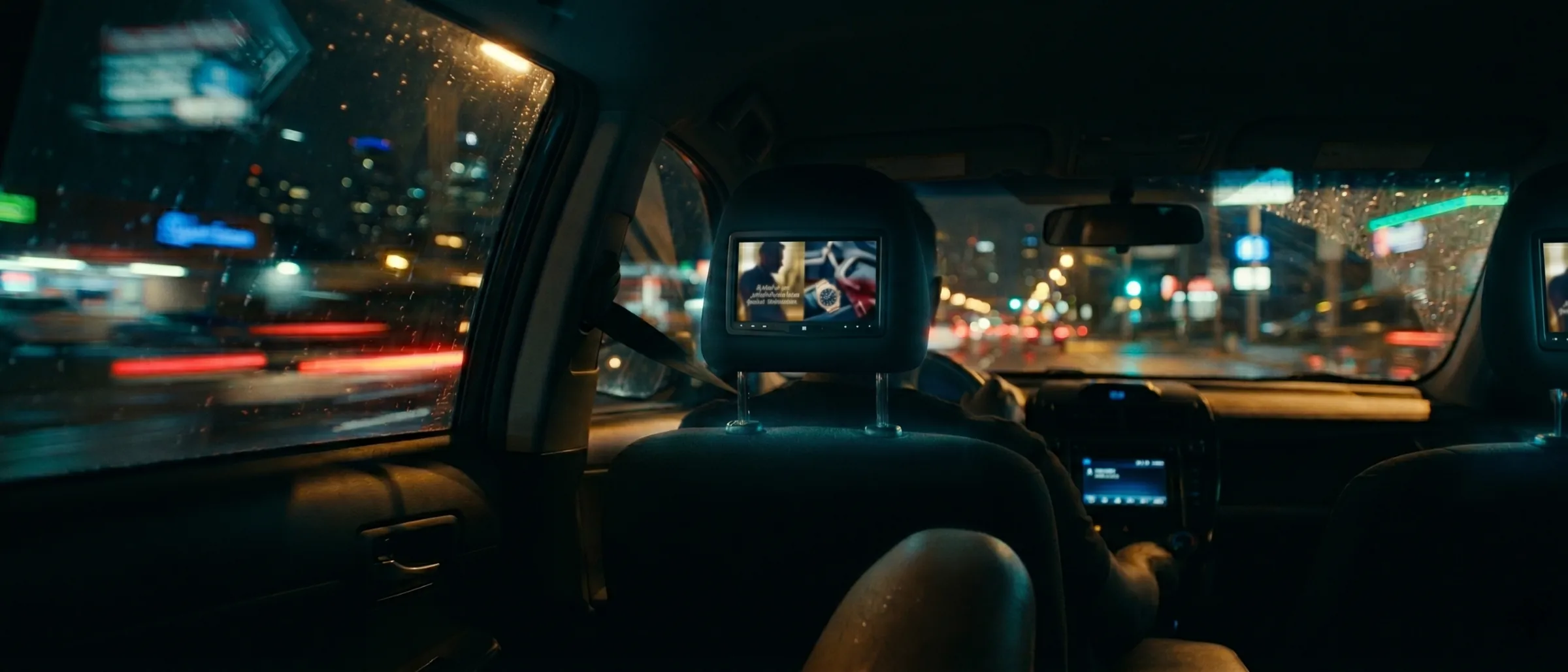
Rideshare is rarely the entire campaign. It's the layer that fills the time between the venue and home, and for the right verticals, that window is the most valuable one of the day.
We work with the rideshare ad platforms that have meaningful in-vehicle screen inventory across our priority markets. Placements run during the ride, not pre-roll, not banner: the screen the rider is already looking at, in the back of the car, for the full duration of the trip.
The strongest applications: legal verticals running after-hours coverage during the DUI-adjacent intake window. Nightlife and event promoters running pre-event awareness on the rides feeding into the entertainment district. Hospitality brands targeting riders headed to or from competing venues. Cannabis in adult-use markets where dispensaries cluster near nightlife corridors.
The window matters
A personal injury firm running rideshare from ten to two on Friday and Saturday nights is in front of the prospect at the exact moment the case mix the firm cares about develops. An event promoter running rideshare on the rides into the venue district during the four weeks before a major show is in front of the buyer at the moment they're already in spending mode.
We don't run rideshare as filler. We run it when the timing window of the ride aligns with the timing window of the brand's conversion event. When it doesn't align, we don't recommend it.
Bar TV builds the recognition layer at the venue. Rideshare reaches the same audience eight to twenty-two minutes later in the back of the car. By the time the rider is home, the brand has had three separate touchpoints in under three hours.
Does the rideshare window fit your campaign?
Talk to usFrequently asked questions
What rideshare ad placements does Highfloor run?
In-vehicle screen placements during the actual ride, not pre-roll, not banner. The screen the rider is already looking at, in the back of the car, for the full duration of the trip. Average ride length is eight to twenty-two minutes; that's the captive window the placement runs in.
Which rideshare platforms?
We work with the rideshare ad networks operating in our priority markets (Phoenix, Boston, Chicago). Coverage and the specific platform mix per market changes as the rideshare ad ecosystem consolidates; we'll spec the current best fit per campaign.
Who should run rideshare?
Verticals where the conversion window aligns with the ride window: legal (DUI defense, personal injury post-bar coverage), nightlife and event promoters (pre-event awareness), hospitality brands targeting riders headed to or from competing venues, and dating and social apps reaching the post-night-out moment.
Is rideshare standalone?
Rarely. Rideshare is the layer that fills the time between the bar and the bedroom, and for the right verticals that window is the most valuable one of the day. But the strongest performance comes from rideshare layered on top of a bar TV flight: the same audience, captive twice, in two different contexts.